Gli aviatori americani ad Aviano celebrano il 31° anniversario del 31st Fighter Wing
American aviators in Aviano celebrate the 31st Anniversary of the 31st Fighter Wing
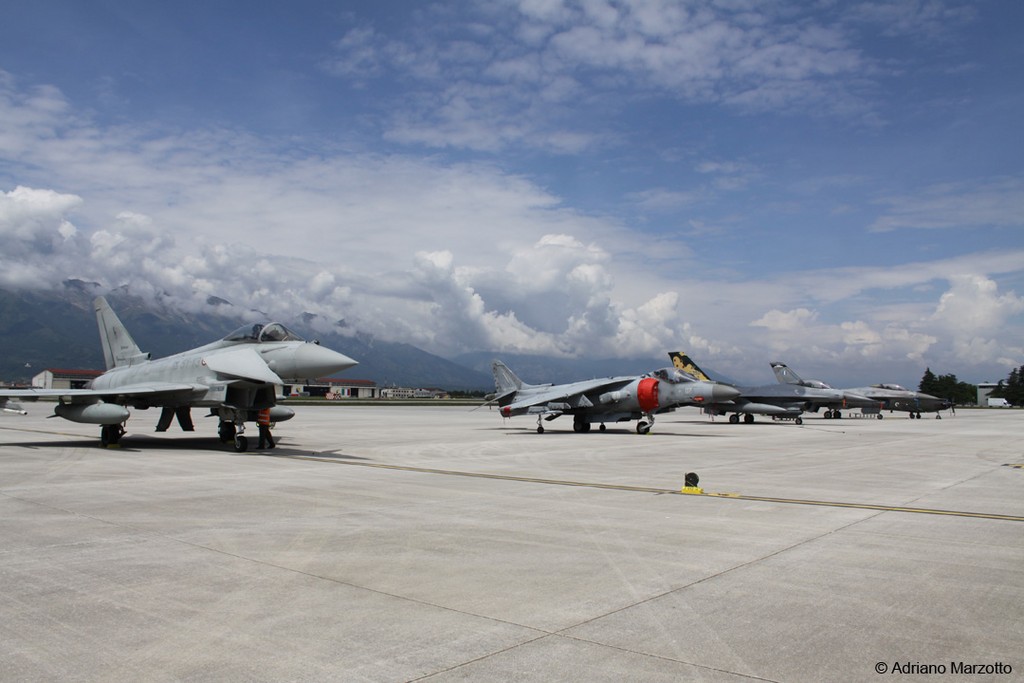
Gli aviatori americani ad Aviano celebrano il 31° anniversario del 31st Fighter Wing
A maggio, dal 19 al 22, il 31st Fighter Wing ha celebrato i 31 anni dalla riattivazione ad Aviano, avvenuta il 1 aprile 1994. I festeggiamenti hanno avuto i momenti topici mercoledì 21, data dello spotters day, e giovedì 22 con un Flying Display comprendente Frecce Tricolori, HH-60W in dimostrazione di soccorso e supporto aereo ravvicinato di F-16 ed esibizione del dimostratore PACAF su F-16.
Questa celebrazione è stata fortemente voluta del Comandante del 31st Fighter Wing per rimarcare sia i successi del reparto che la solida collaborazione tra la U.S. Air Force e l'Aeronautica Militare. Ha rimarcato il Generale di Brigata Tad D. Clark, "…. questo stormo ha un patrimonio e una storia così ricchi, il 31° Anniversario può essere celebrato solo una volta, quindi volevamo che l’evento fosse importante …".
Dalla press release del 31st Fighter Wing Public Affairs :
Il 31st Fighter Wing, fondato nel 1947, vanta una lunga e illustre storia. Nel corso degli anni, ha partecipato a numerosi conflitti e operazioni, prestando servizio nella Seconda Guerra Mondiale, in Vietnam, nei Balcani e in Medio Oriente. Dal suo trasferimento alla base aerea di Aviano nel 1994, lo stormo ha svolto un ruolo chiave nella potenza aerea statunitense e della NATO nell'Europa meridionale.
L'anniversario è stato aperto da un panel di esperti che ha ospitato ex comandanti del 31st Fighter Wing, tra cui il Tenente Generale in pensione Lance K. Landrum, il Maggiore Generale in pensione Barre R. Seguin e il Generale di Brigata in pensione Jason E. Bailey, oltre all'attuale comandante del 31st Fighter Wing, il Generale di Brigata Tad D. Clark. Il panel ha discusso la storia dell'unità, i momenti memorabili vissuti come comandanti e come lo stormo possa prepararsi per il futuro.
Dopo la distruzione delle storica home base del 31st Fighter Wing di Homestead in Florida a causa dell’uragano di classe 5 “Andrews”, il 24 agosto 1992, il rischio che una unità così prestigiosa cadesse nell’oblio c’è realmente stato. Nei primi anni 90, a seguito della fine della Guerra Fredda e caduta del muro di Berlino, era in corso un consistente ridimensionamento dell’apparato militare delle forze aeree americane, con una automatica inattivazione dei reparti residenti nelle istallazioni che via via venivano chiuse, determinando anche la scomparsa di alcune delle più gloriose unità e perdita della loro storia ed eridità.
Per fermare questo trend, il Capo di Stato Maggiore della Air Force, Generale Merrill McPeak, attivò un programma che comparava le unità in pericolo di essere inattivate ad altre per determinare quali risultavano più significative ed importanti nella storia, per procedere all’eventuale spostamento in installazioni non destinate alla chiusura, tenendo così attiva storia ed eredità più significative. Questo è stato il caso del 31st Fighter Wing, in quanto unità con il punteggio più alto nel teatro del Mediterraneo durante la Seconda Guerra Mondiale, sommato ai record di combattimento nel Vietnam e a una serie di primati operativi raggiunti nei primi anni dell’Air Force, che venne così scelto per trasferirsi ad Aviano AB, invece di svanire nell’oblio, al posto del 401st Fighter Wing.
Il 31st Fighter Wing ricevette subito due squadroni di F-16C/D block 40, ex 86th Fighter Wing disattivato a Ramstein AB, il 510th Figher Squadron e il 555th Fighter Squadron. Da allora altre unità sono state via via incorporate nel 31st Operations Group, il 603rd Air Control Squadron, il 56th Rescue Squadron e l’unità gemella 57th Rescue Squadron. Da qualche anno il 31st Fighter Wing, attraverso il 31st Expeditionary Operations Group, controlla anche due unità su droni MQ-9 Reaper, il 717th e il 731th Expeditionary Attack Squadron.
Il suo motto, "Return With Honor", riflette i valori e l'impegno degli aviatori che hanno prestato servizio al suo comando. Come ha detto il Maggiore Generale Seguin, “spesso i jet, gli elicotteri e i radar ricevono l’attenzione della maggioranza del pubblico e della stampa, …. ma tutto questo non funziona da solo. Le persone contribuiscono a far funzionare queste macchine, è la fiducia e il lavoro di squadra degli aviatori che rende tutto possibile”.
La settimana di festeggiamenti si è conclusa giovedì 22 con la festa dell’Anniversario, riunendo personale militare, famiglie, partner italiani dell’Aeronautica Militare ed amici.
Renzo Del Bianco
EMBLEMA del 31st Fighter Wing :
Blasone: Per bend nebulosa d'oro e d'azzurro, al capo una viverna azzurra, senza zampe, appoggiata sulla seconda, il tutto entro un bordo ridotto della prima. Motto: RITORNO CON ONORE. Approvato per il 31st Fighter Group il 28 giugno 1941 e per il 31st Fighter Wing il 13 dicembre 1951 (K&KE 6350).
Significato: Lo scudo è diviso in due nei colori della U.S. Air Force. La linea di divisione è il simbolo araldico delle nuvole. Nella parte superiore dello scudo è posta una viverna senza zampe, con le ali appoggiate. La viverna è un forte e feroce animale mitologico che può simboleggiare la sconfitta di un nemico spietato.
American aviators in Aviano celebrate the 31st Anniversary of the 31st Fighter Wing
From May 19th to 22nd, the 31st Fighter Wing celebrated 31 years since its reactivation at Aviano AB, which took place on April 1, 1994. The celebrations had key moments on Wednesday the 21st, Spotters Day, and Thursday the 22nd, with a Flying Display featuring the Frecce Tricolori, HH-60Ws demonstrating rescue and F-16 flying close air support, and a display of the PACAF F-16 demonstration TEAM.
This celebration was strongly supported by the 31st Fighter Wing Commander to highlight both the successes of the wing and the strong partnership between the U.S. Air Force and the Italian Air Force. Brig. Gen. Tad D. Clark remarked, "...this wing has such a rich heritage and history, the 31st Anniversary can only be celebrated once, so we wanted the event to be significant..."
From the 31st Fighter Wing Public Affairs press release:
The 31st Fighter Wing, founded in 1947, boasts a long and distinguished history. Over the years, it has participated in numerous conflicts and operations, serving in World War II, Vietnam, the Balkans, and the Middle East. Since its relocation to Aviano Air Base in 1994, the wing has played a key role in U.S. and NATO air power in Southern Europe.
The anniversary celebration was opened by a panel of experts featuring former 31st Fighter Wing Commanders, including retired Lieutenant General Lance K. Landrum, retired Major General Barre R. Seguin, retired Brigadier General Jason E. Bailey, as well as the current 31st Fighter Wing commander, Brigadier General Tad D. Clark. The panel discussed the unit's history, memorable moments as commanders, and how the wing can prepare for the future.
After the destruction of the historic home base of the 31st Fighter Wing in Homestead, Florida, by Hurricane Andrews on August 24, 1992, there was a real risk that such a prestigious unit would be forgotten. In the early 1990s, following the end of the Cold War and the fall of the Berlin Wall, a significant downsizing of the US Air Forces was underway, with the automatic inactivation of units based at installations that were gradually being closed. This also led to the disappearance of some of the most glorious units and the loss of their history and heritage.
To stop this trend, Air Force Chief of Staff General Merrill McPeak initiated a program that compared units at risk of inactivation with others to determine which were the most significant and historically important. This program allowed for possible relocation to installations not slated for closure, thus preserving the most significant history and legacy. This was the case with the 31st Fighter Wing, as the highest-scoring unit in the Mediterranean theater during World War II, combined with its combat record in Vietnam and a series of operational firsts achieved in the early years of the Air Force, which was thus chosen to relocate to Aviano AB, rather than fade into oblivion, in place of the 401st Fighter Wing.
The 31st Fighter Wing immediately received two squadrons of F-16C/D Block 40s, formerly aircraft of the 86th Fighter Wing inactivated at Ramstein AB, the 510th Fighter Squadron and the 555th Fighter Squadron. Since then, other units have been gradually incorporated into the 31st Operations Group, the 603rd Air Control Squadron, the 56th Rescue Squadron and its sister unit, the 57th Rescue Squadron. For several years, the 31st Fighter Wing, through the 31st Expeditionary Operations Group, also controls two MQ-9 Reaper drone units, 717th and 731th Expeditionary Attack Squadron.
His motto, "Return With Honor," reflects the values and commitment of the aviators who have served under his command. As Major General Seguin said, "Jets, helicopters, and radars often receive the majority of the public and press attention... but this doesn't work alone. People contribute to making these machines work; it's the trust and teamwork of the aviators that makes it all possible."
The week of celebrations concluded on Thursday the 22nd with the Anniversary celebration, bringing together military personnel, families, Italian Air Force partners, and friends.
Renzo Del Bianco
EMBLEM of the 31st Fighter Wing :
Blazon: Per bend nebule Or and Azure, in chief a wyvern Light Blue, sans legs, endorsed of the second, all within a diminished bordure of the first. Motto: RETURN WITH HONOR. Approved for 31st Group on 28 Jun 1941 and for 31st Wing on 13 Dec 1951 (K&KE 6350).
Significance: The shield is divided per bend nebule in the colors of the Air Force. The partition line is the heraldic symbol for clouds. In the chief or upper portion of the shield is placed a wyvern without legs, the wings endorsed. The wyvern is a strong and fierce mythical animal which may symbolize the overthrow of a vicious emeny.

